At the New York Food Business Association, we conduct ongoing internal research into key areas affecting the food industry, focusing on issues that require both long-term attention and practical insight. This work supports the development of strategies and materials intended to address persistent challenges faced by food operators, regulators, and the broader food system.
The relevance and demand for this research continue to grow, and we view it as an essential part of the Association’s mission and activity.
We approach this work with flexibility and depth, recognizing that meaningful progress often depends on understanding context, not just applying standards. By maintaining an active research function within the Association, we’re better positioned to adapt to emerging challenges and contribute where insight is most needed.


Our current focus spans several critical areas. One of these is the foundation and advancement of food safety as a working system—examining how principles are absorbed, practiced, and sustained in real-world environments.
Closely related, yet requiring a different investigative approach, is the issue of foodborne illness linked to production practices. While it shares roots with food safety, this area involves reactive analysis, different expertise, and case-based methodologies.
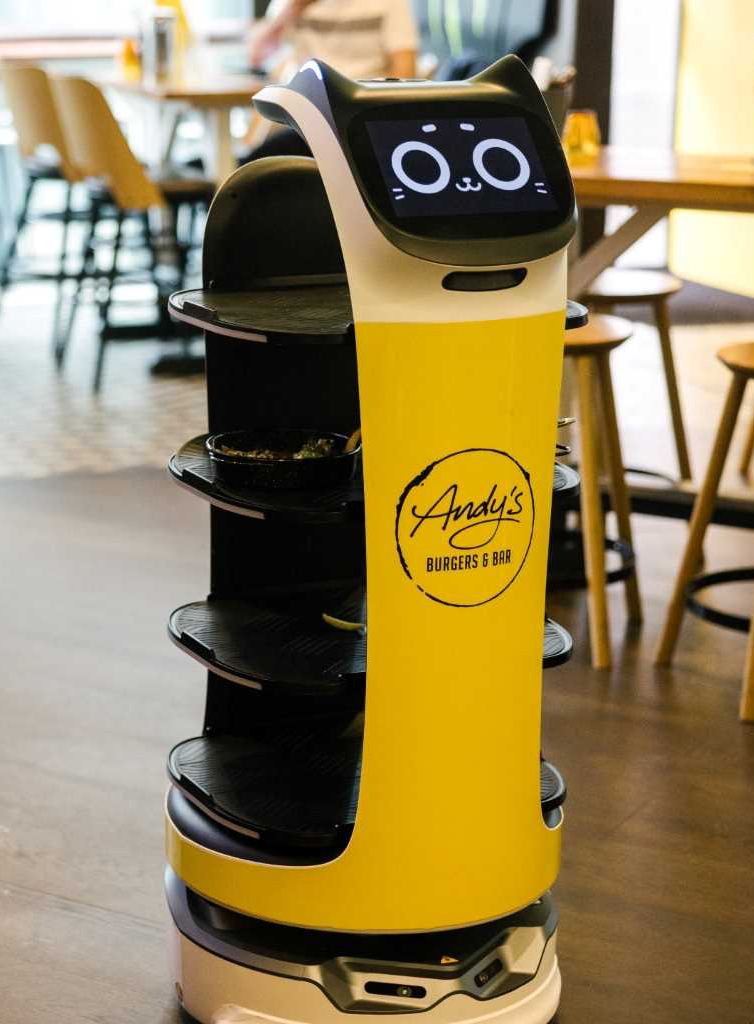
Another direction of our work lies in the integration of emerging technologies—particularly artificial intelligence—and how they can reshape small and medium food operations by improving communication, reducing costs, and enhancing access to essential services.
Below, you can read more about each of our current areas of work >>
Foundations and Development of Food Safety
Drawing on the expertise of highly qualified professionals with backgrounds in inspection, food safety enforcement, and animal-based food production, our Research Lab explores practical, real-world challenges in the food sector. We focus on understanding not just what the rules are—but why they exist, how they’re followed (or not), and how systems can evolve naturally.
One of our core areas of work is promoting food safety not merely as compliance, but as a genuine internal value within small and medium-sized food businesses. Our team includes specialists who have worked across multiple regulatory agencies and understand firsthand the pressures and motivations of operators. Their insight helps us explore what drives long-term commitment to food safety, beyond enforcement.
We analyze how and why violations emerge—what leads a food business to lose control, become unsanitary, or cut corners. Our goal is not to assign blame, but to understand the underlying systems: staffing, culture, training, and incentives. This helps identify sustainable, voluntary improvements that last longer than reactive fixes.
Our collaborative approach allows us to study the evolution of food safety norms: how technical rules (like refrigeration temperatures) are created, how they’re communicated, and why they may be ignored or misunderstood. From the first steps of opening a new business to day-to-day operational challenges, we aim to trace how food safety can become second nature—not a burden.
Some of the insights gained through this area of work directly inspired our team to design an A+ Voluntary Implementation Program (VIP)—a practical initiative aimed at supporting businesses that strive to uphold strong food safety values without external pressure. You can learn more about the A+ VIP initiative here.


Foodborne Illness Linked to Production
Examining the real-world causes of foodborne illness within small and mid-sized food operations, our team focuses on identifying risks at their source. We study not just outbreaks, but the systems and patterns that allow them to emerge—especially where oversight is limited and consequences are severe.
Our work in this area draws on the combined experience of professionals from enforcement, inspection, food production, and clinical fields—including infectious disease. With such a range of perspectives and highly qualified specialists involved, we’re able to approach foodborne risks with both operational insight and scientific depth, helping us identify where breakdowns occur and how they can be prevented in real-world settings.
We focus on the intersection between everyday business practices and preventable outcomes—where simple oversights can lead to serious consequences. Our work examines the kinds of decisions, structures, and habits that make certain food environments more prone to outbreaks of illness or allergic reactions. We’re especially focused on high-impact, low-awareness risks that may be invisible to operators until it’s too late.
Rather than treat foodborne illness as a matter of isolated incidents, we look at it as a systemic issue—one shaped by design, training, equipment, and assumptions. Through this lens, we develop tools and frameworks that help businesses understand, mitigate, and prevent these events before they happen.
AI Integration in Small and Medium Food Operations
Exploring the transformative potential of artificial intelligence in the food sector, we examine how AI can solve long-standing problems in small and mid-sized operations—especially where resources and staffing are limited.
We are proud to include in our team not only highly qualified IT professionals, but individuals with deep, long-term experience in the tech industry. Their expertise supports our belief that AI is positioned to revolutionize customer service in food businesses. In recent years, what was once a simple phone call to a restaurant or café has often become a frustrating experience—voicemails, unreturned messages, or long waits for basic answers. We believe this phase is ending. Soon, every customer will be able to interact with AI that understands the business inside and out, handles inquiries flawlessly, takes orders, and responds to needs as smoothly as a human—but faster, cheaper, and without delay.
Beyond customer service, food business operators often rely on expensive third-party services—legal advice, financial consultations, accounting support. We’re working to identify how AI can provide these same functions reliably, securely, and at a fraction of the cost. Our goal is not just to study these tools, but to bring them to our members first—so they’re informed, equipped, and ahead of the curve as these technologies mature.
But is that all? We believe the potential uses of AI in food businesses may go far beyond what we can currently imagine. That’s why this area remains an active focus of our work—and why our members can expect to see timely, practical guidance as these possibilities unfold.