Starting a food business can be one of the most exciting and overwhelming decisions you’ll ever make. If you’re based in New York City, the path comes with unique challenges — from dense regulations to fierce competition and high operating costs. Yet for many, the idea of turning a passion for food into a profession remains irresistible. Whether you’re dreaming of opening a bakery, selling sauces at a farmers’ market, or launching a catering service, the first steps are often the hardest to take — especially when you’re not sure where to begin or what to expect.
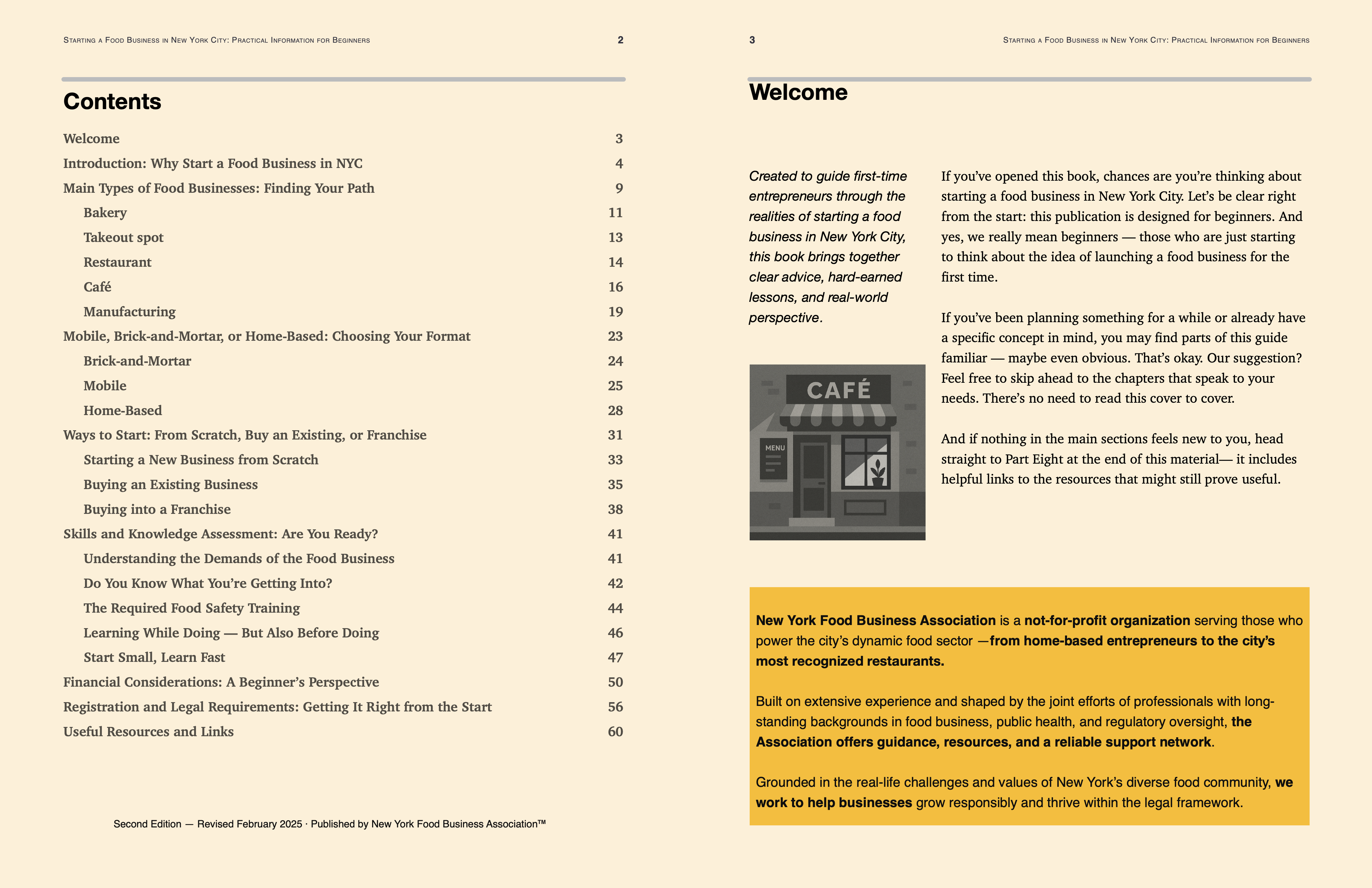
That’s why we created a resource that lays out the core ideas and questions you need to consider before diving in. Below, we’ve outlined key concepts from the NYFBA book Starting a Food Business in New York City, giving you a taste of the topics it covers. This article isn’t a full guide, but it will help you understand the landscape, spot potential pitfalls early, and think more clearly about whether this is the right path for you — and if so, how to move forward with purpose.
Starting a food business in New York City isn’t just about having a great recipe — it’s about navigating a maze of decisions, regulations, and realities. Before spending time and money, it’s worth thinking through some core questions. This book offers a condensed guide to the essentials — helping you assess your readiness, understand your options, and avoid common missteps.
Is running a food business right for you?
The food world is creative, exciting, and full of energy — but also intense, stressful, and unforgiving. Long hours, high overhead, and strict regulatory requirements are part of the package. Many entrepreneurs underestimate the mental and emotional toll. Ask yourself: Do you thrive under pressure? Can you handle uncertainty? Are you ready to commit time, effort, and money with no guaranteed return? This is not meant to discourage you — but facing these realities early can save you major setbacks later.
Are you aiming for a business or just a project?
Before diving in, define your goal clearly. Do you want to start a long-term, scalable business — or are you testing an idea, hoping to make extra income, or fulfilling a personal dream? Each path has different expectations and risks. A formal business plan may not be necessary right away, but you do need a clear sense of your motivations, target market, and how much you’re willing to invest.
What kind of food business fits your situation?
New York City offers many food-related business models — catering, food trucks, packaged goods, delivery-only kitchens, and more. Each comes with different licensing requirements, startup costs, and operational demands. Your available time, capital, and risk tolerance should shape your choice. For example, renting a commercial space brings high upfront costs, while home-based production under specific rules might be more manageable.
Do you understand the local rules and regulations?
NYC has one of the strictest regulatory environments in the U.S. You’ll need to deal with the Department of Health, Department of Buildings, and other city agencies. Requirements vary dramatically depending on your concept. Licenses, inspections, zoning laws, and food safety compliance aren’t optional. It’s essential to research what applies to your business type — and not just assume you’ll “figure it out later.”

Are you prepared for the financial realities?
Many food ventures fail not because of poor food, but because of bad financial planning. Can you cover equipment, supplies, rent, permits, and early losses? Have you accounted for taxes, insurance, and workers? Even if you start small, every dollar counts. Misjudging costs or relying too heavily on early revenue can quickly sink a promising idea.
Have you validated your idea with real people?
Enthusiasm is good — but it’s not enough. Talk to potential customers. Ask: Would they buy this? At what price? Why your product over others? Share samples, test at local events, or sell under someone else’s license first. Early feedback helps you refine your concept and avoid costly assumptions.
Do you have a plan for growth — or a clear exit?
You don’t need to think five years ahead on day one, but you should have a rough sense of what success looks like. Do you want to grow, sell, franchise, or just break even? If things go well, how will you scale? If not, how will you pivot or stop? Clear thinking early on can prevent confusion and burnout later.
Are you ready to take the first legal step?
Even before launching, you may need to register your business, open a separate bank account, or apply for sales tax collection. Setting things up properly from the beginning protects you legally and financially. It also helps you separate personal expenses from business ones — something many first-time owners regret not doing sooner.
Conclusion
No single book can answer every question about starting a food business in New York City — and this one doesn’t try to. Instead, it helps you ask the right questions early, avoid costly missteps, and understand the broader landscape before you commit your time and money. It’s not a how-to manual with step-by-step instructions — it’s a mindset guide. It encourages you to think like an entrepreneur, recognize the complexity of the process, and approach your idea with more clarity and confidence.
This book is intended specifically for beginners — those with little or no experience in food business or regulation. If you already have some background or access to resources, parts of it may feel familiar or self-evident. That’s perfectly fine: the book isn’t meant to be read cover to cover. You’re encouraged to focus on the sections most relevant to your own situation.
If this kind of guidance speaks to you, we invite you to become a member of the New York Food Business Association. Members receive full access to this book and other exclusive resources that can help you move forward with purpose.