Starting a food business from home might seem like the most affordable and flexible way to break into the industry — and in many cases, it is. But in New York City, it comes with specific rules, restrictions, and expectations that can easily catch new entrepreneurs off guard. Many people begin with the hope of turning a passion into a livelihood, only to find themselves overwhelmed by unclear guidance, confusing regulations, or misinformation online.
This guide was created to help you avoid that. It provides a clear and realistic starting point for anyone considering preparing food from home for sale — whether as a long-term business, a side hustle, or a way to test an idea before investing in a commercial setup. If you’re unsure what’s allowed, what’s not, or how to approach the process wisely, you’re in the right place.
Have you ever wondered whether you could turn your kitchen into a launching pad for a food business? Maybe you’ve got a killer cookie recipe or a passion for vegan sauces—but renting a commercial kitchen or food truck feels overwhelming or too expensive. If you’re in New York City, there’s good news: you might be able to legally sell certain foods prepared right at home. But as you’d expect, there are rules.
What kinds of homemade foods are allowed for sale in New York City?
New York City does allow certain types of food to be prepared at home and sold to the public—but the range is limited, and the rules are strict. Understanding what qualifies as acceptable under these guidelines is the first step for anyone hoping to explore this option. Some food categories are explicitly off-limits, while others are permitted under specific conditions. It’s important to recognize the distinction early on to avoid wasted effort or potential violations.
Where can home-prepared food be sold?
While options exist for selling food made at home, they aren’t as open-ended as many first assume. Local venues such as farmers markets and small events often present opportunities, but others—like major grocery stores or national delivery platforms—may be restricted. Navigating where you’re allowed to sell is just as important as knowing what you’re allowed to make.

What conditions must your home kitchen meet?
The idea of using your home kitchen for business may sound simple, but in practice, there are many disqualifying factors. The physical layout, cleanliness, and even the presence of pets can affect whether your setup is acceptable. Understanding the basic eligibility criteria in advance can save time and help you prepare effectively.
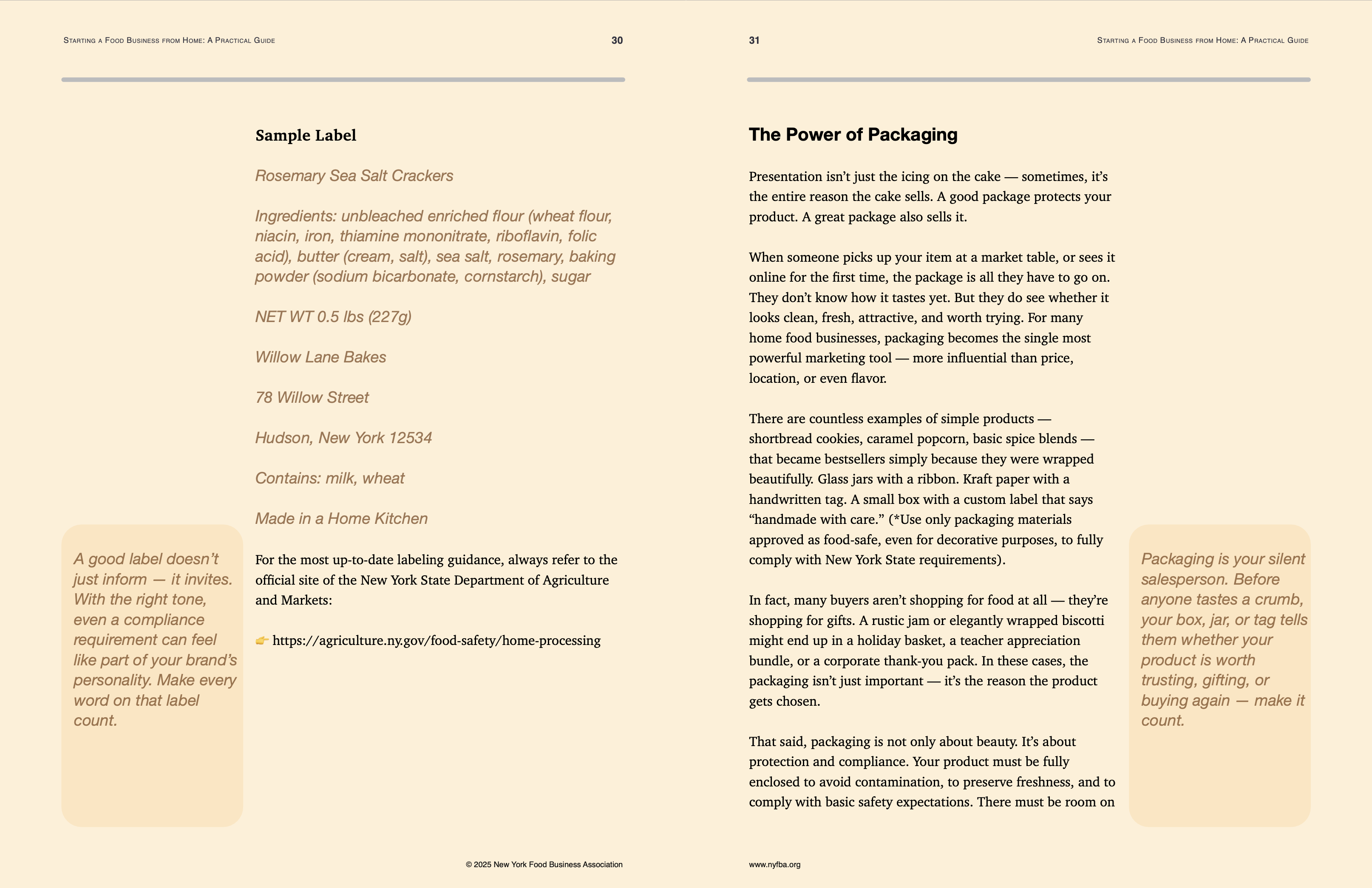
What are the labeling requirements?
Selling homemade food legally in NYC isn’t just about the food itself—it’s also about how it’s labeled. Clear, informative labeling isn’t optional; it’s a requirement. There are specific elements that must be included, and they serve both regulatory and practical purposes, like protecting consumers and establishing trust. Missing a required item or mislabeling a product can create serious problems.
What should you know about packaging and presentation?
Home processors must pay close attention to how their products are packaged—not just for appeal, but for safety and compliance. Even if high-end packaging isn’t required, sanitary, secure, and clearly labeled containers are non-negotiable. Making a good impression with clean, consistent presentation is often as important as the product itself.
What are the boundaries—and the opportunities—of this business model?
Working from home in the food space comes with hard limits. Many types of food are not allowed, and the business may not scale easily. But within those constraints lies real potential for income, creativity, and community connection. For the right person, this model can offer a satisfying and flexible entry into food entrepreneurship.
Why it’s worth learning the rules before you begin
Many people exploring home-based food sales are doing so for the first time—and the learning curve can be steep. Understanding what’s allowed, where to start, and how to approach the process can prevent frustration and wasted investment. Whether you’re testing an idea or building toward a larger goal, a clear understanding of the framework can make all the difference.
Conclusion
No single article or guide can tell you everything about running a home-based food business in New York City. But this one is designed to help you avoid common pitfalls, understand key legal and practical boundaries, and see what’s realistically possible before you dive in. It doesn’t walk you through each step like a checklist — instead, it prepares you to navigate the system with clear expectations and smarter decisions.
This book is meant for beginners — especially those who are curious about selling food from home but don’t yet know what’s allowed, where to start, or whether it’s even feasible in NYC. If you already have some knowledge or access to regulatory help, some parts may feel familiar. That’s fine. You don’t need to read it from start to finish. Focus on the parts that match your goals, your product ideas, or your concerns.
If this kind of guidance speaks to you, we invite you to become a member of the New York Food Business Association. Members receive full access to this book and other exclusive resources that can help you move forward with purpose.